Trash Kenji: Unleashing Fierce Power in Your Designs
There's a particular kind of energy that certain designs demand. It's a raw, unapologetic force that doesn't ask for permission. You see it on a band's tour poster that's already peeling off a telephone pole, or on a t-shirt that feels like it has a story to tell. This isn't the world of polite, corporate typography. This is where Trash Kenji lives—a premium font built to inject that fierce, visceral power directly into your work. For designers, entrepreneurs, and creators who need their message to hit with impact, understanding this typeface is about unlocking a specific, potent kind of visual voice.
The Anatomy of an Attitude: What Defines Trash Kenji?
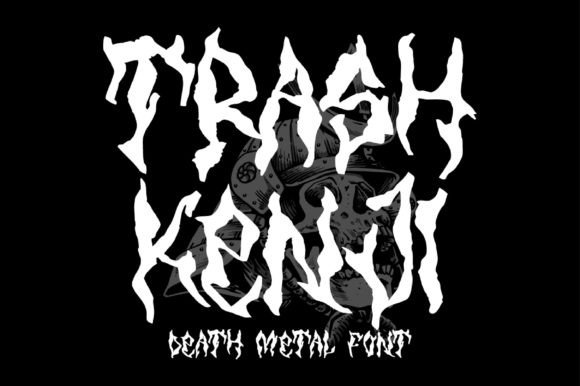
At its core, Trash Kenji is a display font, but that simple classification hardly does it justice. Imagine the disciplined structure of a traditional serif font, then envision it being reclaimed by nature—weathered, eroded, and marked by time. The letterforms have a distressed, textured appearance, with rough edges and inconsistent weights that suggest something handmade, or perhaps something that has survived a storm. It’s not a clean, digital product; it has the soul of an artifact.
This gives the typeface an immediate and powerful personality. It feels gritty, authentic, and slightly rebellious. It avoids the overused, overly stylized look of many "grunge" fonts, instead offering a more nuanced and sophisticated decay. The visual style is perfect for projects that need to convey strength, endurance, or a counter-culture edge. Think of the worn spine of a hardcover book, the stencil on a shipping crate, or the faded insignia on a vintage leather jacket. Trash Kenji channels that same tangible, storied quality.
Where Grit Meets Strategy: Practical Applications
The true value of a creative font like this is in its application. Knowing where to deploy Trash Kenji is key to maximizing its impact without overwhelming a project. Its bold, textured nature makes it a natural fit for environments where first impressions are loud and immediate.
Branding and Merchandise with a Pulse
For logo design and brand identity, Trash Kenji is a strategic choice for brands that want to project authenticity and edge. It’s exceptionally effective for craft breweries, independent record labels, outdoor adventure companies, artisan workshops, and any business that prides itself on not being mass-produced. On merchandise—t-shirts, hats, patches, stickers—its textured nature translates beautifully to screen printing and embroidery, giving each piece a custom, almost one-of-a-kind feel. It makes your brand identity feel earned, not just designed.
Print and Digital That Demands Attention
In the realm of editorial design and packaging design, this font excels as a headline or accent typeface. Imagine it on the cover of a gritty crime novel, the title card for a documentary, or the label on a bottle of hot sauce. It immediately sets the tone. For web design, it can be used for hero section headlines or call-to-action buttons where you need to break through the visual noise. In social media graphics, it stops the scroll, making it ideal for quote graphics, event promotions, and album announcements that need to feel urgent and real.
Designing with Intent: Readability, Hierarchy, and Pairing
Using a powerful display font effectively requires a designer's discipline. Trash Kenji is not your body copy font. Its strength is in large, impactful doses. Using it for long paragraphs would sacrifice readability, which is the cardinal sin of typography. Instead, use it to establish a clear visual hierarchy. Let it command the headlines, subheadings, and key logos, while supporting it with a highly legible sans serif font for body text. A clean, neutral sans serif creates a perfect counterbalance, allowing the texture of Trash Kenji to shine without causing visual fatigue.
Before committing, always test the font in context. How does it look at the exact size it will be used? Does its texture hold up when printed on different materials or viewed on various screen resolutions? Review the full character set—does it include the ligatures, alternates, and language support your project needs? Understanding the included styles within the Trash Kenji family is also crucial. Does it come with different weights or a cleaner version? This versatility can be vital for creating a cohesive system across a brand's various touchpoints.
Making the Right Choice for Your Project
Choosing any premium font is an investment, and it should be evaluated as such. Ask yourself: does the personality of Trash Kenji align with the core message of my project? Is the audience likely to resonate with this raw, powerful aesthetic? For a tech startup's investor pitch deck, it's probably the wrong tool. For a underground music festival's poster, it might be perfect.
Consider the practicalities of commercial licensing. Ensure the license covers your intended use, whether for a single client project, merchandise for sale, or digital advertising. A legitimate license protects you and respects the work of the type designer. Finally, think about longevity. While trends in modern typography come and go, a font with this much character and craftsmanship has a timeless quality. It’s not chasing a fad; it’s channeling a permanent aspect of human expression—the desire to make a mark that feels real.
In the end, Trash Kenji is more than just a design asset. It’s a tool for storytelling. It’s for the projects that need to feel lived-in, the brands that have something to prove, and the messages that deserve to be shouted, not whispered. When your design needs to channel that fierce, uncompromising power, this typeface provides the voice.