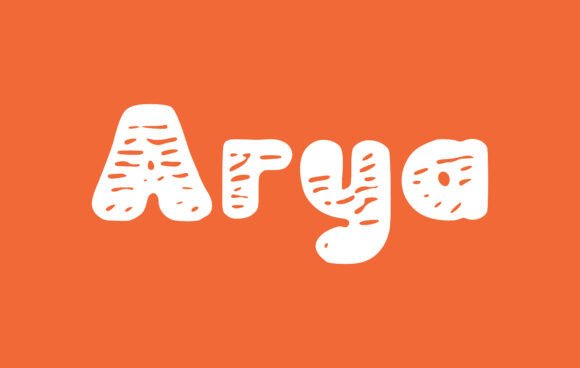
Arya: The Quirky Display Typeface That Brings Whimsy to Your Projects
In the world of modern typography, finding a typeface with genuine personality can feel like striking gold. Arya is one of those finds—a bold, quirky display font that doesn't just sit on the page but practically bounces off it. Each letter carries hand-drawn textures that feel intentionally imperfect, giving the entire character set an organic, crafted quality that's surprisingly rare in digital typefaces. If you've been searching for something that breaks away from sterile geometric fonts or overused script styles, Arya deserves a serious look.
What sets Arya apart isn't just its playful appearance—it's the consistency of its charm. Every glyph maintains the same whimsical energy, from uppercase headlines to lowercase body text, from numerals to punctuation marks. This isn't a font that relies on a few standout characters to carry the weight. The hand-drawn textures woven into each letter create a cohesive visual language that feels both intentional and spontaneous. For designers, marketers, and creative professionals, that kind of reliability matters when building a brand identity or editorial layout.
Where Arya Truly Shines
Arya finds its sweet spot in projects that need to communicate warmth, creativity, and approachability. Children's books are an obvious match—the font's playful energy pairs naturally with illustrated stories, chapter headings, and cover designs that need to capture a young reader's attention. But its appeal extends well beyond the kids' section. Think about toy packaging design, birthday party invitations, educational materials, and activity books. The hand-drawn quality makes printed materials feel tactile and personal, even before anyone touches them.
For small business owners and entrepreneurs, Arya offers a distinctive voice for brands that want to stand apart from corporate minimalism. Bakeries, craft studios, independent toy makers, children's clothing lines, and artisan food brands can all leverage this creative font to signal what makes them different. It tells customers, before they read a single word of copy, that this brand values personality and craftsmanship over cookie-cutter professionalism.
Social media graphics present another strong use case. In feeds crowded with clean sans serif fonts and predictable layouts, Arya's textured letterforms catch the eye immediately. Instagram posts, Pinterest pins, YouTube thumbnails, and promotional banners all benefit from a typeface that stops the scroll. The font works particularly well for quotes, announcements, and call-to-action overlays where a few words need maximum visual impact.
Understanding Arya's Design Strengths
From a visual hierarchy perspective, Arya excels as a headline and accent font. Its detailed textures become most apparent at larger sizes, where the hand-drawn quality can breathe and make its full impression. At smaller sizes, some of that nuance gets lost, which is worth keeping in mind during layout planning. This is typical of display fonts—they're built for impact, not for dense paragraphs of body text.
Pairing Arya with complementary typefaces is where the real design work happens. A clean sans serif font for body copy creates a satisfying contrast that lets Arya's personality lead without overwhelming the reader. Think of it as a conversation: Arya introduces the topic with energy and flair, while the supporting font delivers the details with clarity. If your project leans more editorial or traditional, a simple serif font can also work beautifully alongside Arya, especially in layouts that mix playful headings with more refined body text.
For logo design, Arya works best for brands that want an immediate sense of friendliness and creativity. It's particularly effective for wordmark logos where the typography itself carries the brand's personality. However, logos that need to scale down to very small sizes—think favicon territory or embossed packaging—might require a simplified alternative. Testing your logo at multiple scales before committing is always smart practice.
Practical Considerations for Using Arya
Before integrating Arya into any project, evaluate whether its personality aligns with your audience's expectations. A children's educational app? Perfect fit. A law firm's annual report? Probably not. The font communicates specific emotional signals, and those signals need to match the context. This isn't a limitation—it's good design thinking. Every typeface carries associations, and the best designers choose fonts that reinforce the message rather than contradict it.
Licensing deserves attention if you're planning commercial use. Many premium fonts come with specific terms regarding digital distribution, print runs, and merchandise. Review the license carefully before using Arya on products for sale, client deliverables, or widely distributed digital content. Some licenses cover personal and commercial use under one agreement, while others require separate purchases. Understanding these details upfront prevents headaches later.
When testing Arya in your layouts, pay attention to letter spacing and line height. Hand-drawn and textured fonts sometimes benefit from slightly looser tracking than you'd apply to geometric typefaces. The organic shapes need a little breathing room to avoid feeling cramped. Experiment with these settings in your design software before finalizing anything. A few adjustments to spacing can transform good typography into great typography.
Building Projects Around Character-Driven Typography
The broader lesson Arya teaches is one worth carrying into every design decision: typography shapes perception before content does. A packaging design featuring Arya tells a different story than the same layout in a neutral geometric font. Editorial design for a family magazine reads differently when headings use a hand-drawn typeface versus a corporate sans serif. These choices aren't decorative—they're strategic.
For content creators and bloggers, Arya can become part of a recognizable visual system. Using it consistently across thumbnails, headers, and branded graphics builds familiarity with your audience. Over time, that consistency compounds into recognition. People start associating the font's energy with your content, which is exactly how strong brand identity develops.
Designers working on web design projects should test Arya's rendering across browsers and devices. Display fonts with detailed textures can sometimes lose clarity on lower-resolution screens. Previewing at actual pixel sizes on both desktop and mobile ensures the font performs as expected in real-world conditions. Pairing it with web-safe alternatives for body text also protects readability across platforms.
Arya isn't trying to be everything to every project—and that's precisely its strength. It knows what it is: a bold, whimsical, character-driven display font that brings genuine joy to the right creative context. Whether you're designing a children's book cover, launching a playful brand, crafting social media content, or building packaging that stands out on a shelf, Arya gives you a tool that most design assets simply can't replicate. The hand-drawn textures, the consistent personality, the sheer energy packed into every letter—it all adds up to something worth exploring for your next project.