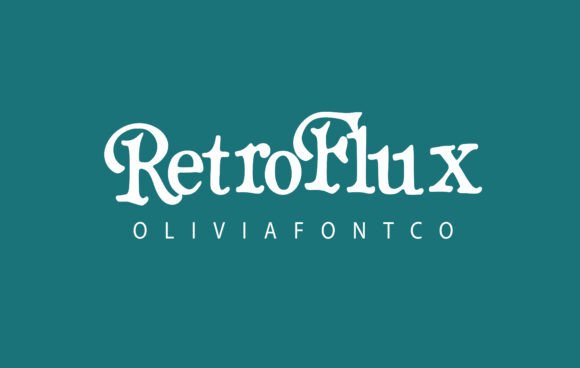
Retroflux: The Handwritten Font with a Romantic Edge
There's a particular warmth that comes from seeing authentic handwriting. It feels personal, immediate, and full of character. In the digital world, where precision and uniformity often dominate, capturing that organic essence is a powerful design choice. This is where a typeface like Retroflux steps in. It's not just another script font; it's a carefully crafted handwritten font that carries a distinct romantic and nostalgic flair. Designed to be both beautiful and highly functional, Retroflux offers a versatile tool for creatives looking to inject personality and authenticity into their projects.
The Visual Soul of Retroflux: More Than Just Curves
At its core, Retroflux embodies a graceful fluidity. The letterforms are based on authentic penmanship, but they've been refined for consistency and readability. You'll notice gentle variations in stroke weight that mimic the natural pressure of a pen on paper, avoiding the sterile, uniform look of many digital scripts. The connections between letters feel intentional and smooth, creating a harmonious flow across words and sentences.
Its "romantic touch" isn't overly ornate or frilly. Instead, it manifests in soft, rounded terminals and a generally warm, approachable demeanor. The x-height is generous, which significantly boosts its legibility at smaller sizes—a common hurdle for many script fonts. This makes it a surprisingly practical choice not just for headlines, but for short blocks of body text where you want to maintain that personal feel. The overall personality strikes a balance between playful elegance and dependable clarity.
Where Retroflux Truly Shines: Practical Applications
Understanding a font's strengths helps you deploy it effectively. Retroflux excels in contexts where human connection, warmth, and a touch of sophistication are desired. Think of it as a creative font that bridges the gap between casual and polished.
Branding and Logo Design
For businesses built on personal service, artisanal quality, or a boutique aesthetic, Retroflux can be a cornerstone of the brand identity. Imagine it on a bakery's logo, a wedding planner's website, or a handmade jewelry brand's packaging. It immediately communicates care, craftsmanship, and a personal touch. When used as the primary wordmark, it creates strong recognition. Paired with a clean, geometric sans serif font for body text, it establishes a clear and appealing visual hierarchy.
Editorial and Publishing
In editorial design, Retroflux can break the monotony of standard typographic layouts. Use it for magazine pull quotes, chapter titles in a lifestyle book, or the header of a blog post about travel or food. Its warmth makes content feel more inviting and readable. For publishers, it’s an excellent choice for book covers in the romance, contemporary fiction, or memoir genres, where the cover needs to convey emotion and story.
Digital and Social Media
The digital landscape thrives on personality. Retroflux is perfect for social media graphics, especially Instagram quotes, story backgrounds, and Pinterest pins. Its handwritten style is highly engaging on platforms where users scroll quickly—it stops the eye with its authentic feel. In web design, it can be used strategically for call-to-action buttons, introductory headings, or testimonial sections to add a layer of trust and approachability. Just ensure sufficient contrast against the background for optimal screen readability.
Print and Packaging
From wedding invitations and greeting cards to product labels and packaging design, Retroflux delivers. For stationery, it evokes the classic charm of a handwritten note. On product labels for artisanal goods like candles, soaps, or gourmet foods, it reinforces the product's handmade story. The key here is pairing it with complementary elements; a simple serif font or a bold sans serif can ground it beautifully.
Integrating Retroflux into Your Design Workflow
Choosing the right font is just the first step. Using it effectively is what elevates a design. Here’s how to make the most of Retroflux.
Evaluating Fit and Font Pairings
Before you commit, consider your project's tone. Is it friendly and informal? Elegant and romantic? Retroflux leans towards warmth and elegance, so it might not be the best fit for a corporate finance report or a tech startup's primary interface. Test it early by setting your key headline and a sample paragraph. For font pairing, contrast is your friend. A sturdy, neutral sans serif like Montserrat or Lato makes a fantastic partner for body text, letting Retroflux headlines sing. For a more classic pairing, a readable serif like Lora or Merriweather can create a sophisticated, layered look.
Exploring Styles and Readability
Check what's included with the premium font family. Does it come with multiple weights (light, regular, bold)? Are there alternate characters or stylistic sets? These extras provide flexibility. Always conduct a readability test. Set a paragraph in 12-point size and see if it remains comfortable to read. Use it for subheadings or short text blocks rather than lengthy articles. Remember, even the most beautiful typeface fails if it hinders communication.
Licensing and Commercial Use
As a commercial font, Retroflux requires a license for use in client projects, merchandise, or any product for sale. This is standard for professional design assets. Always review the specific license terms—whether it's for desktop, web, app, or server use—to ensure compliance. Investing in a proper license supports the type designers and grants you peace of mind for your professional work.
In the end, Retroflux is more than just a collection of letters. It's a tool for storytelling, a way to infuse digital and printed work with the irreplaceable quality of human touch. By understanding its personality and applying it thoughtfully, you can create designs that don't just look good, but feel genuinely connected to your audience.