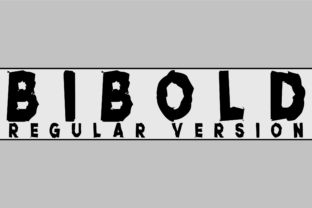
Bibold: A Technical Edge for Modern Design
In a sea of soft curves and friendly rounded fonts, sometimes a design needs a different kind of presence. It requires structure, clarity, and an unapologetically modern feel. This is where a typeface like Bibold enters the conversation. As a strong and structural font, Bibold offers a distinct technical look that can ground a project in confidence and precision. It’s not just about being bold; it’s about being deliberately constructed. For designers, entrepreneurs, and creators looking to make a clear, impactful statement, understanding the practical applications of a font like Bibold is a valuable skill.
The Anatomy of a Technical Typeface
At its core, Bibold is a display font, engineered for impact at larger sizes. Its visual personality is defined by geometric construction and a consistent, heavy weight. You’ll notice sharp, clean terminals instead of soft, tapered ends. The letterforms often feature a squared-off structure, particularly in curves like those in the 'O' or 'C', giving it a machined, digital-ready aesthetic. This isn’t a handwritten font full of personality quirks; it’s a modern typography tool designed for legibility and strength.
While it sits comfortably in the sans serif font family, its sheer weight and architectural feel set it apart from more neutral grotesque or humanist sans serifs. Think of it as the typographic equivalent of exposed steel beams in modern architecture—functional, honest, and a key part of the visual statement. This makes it an excellent creative font for projects that need to communicate innovation, reliability, or a forward-thinking mindset without relying on decorative flourishes.
Strategic Applications: Where Bibold Makes an Impact
The real value of any premium font lies in its application. Bibold’s strengths shine in specific contexts where its technical character can solve design problems and elevate a project’s perception.
Building a Recognizable Brand Identity
For logo design, Bibold provides a solid foundation. Its high-contrast, structured forms are inherently memorable and scale well from a favicon to a billboard. A tech startup, a software-as-a-service (SaaS) company, or a modern architectural firm could use Bibold for their wordmark to instantly convey stability and innovation. When building a brand identity, using Bibold for headlines and key messaging creates a consistent, professional tone. It pairs exceptionally well with a more neutral serif font or sans serif font for body text, creating a clear font pairing that establishes a strong visual hierarchy.
Commanding Attention in Marketing and Publishing
In editorial design, such as magazine covers, report covers, or blog headers, Bibold acts as a visual anchor. Its weight commands attention, making it perfect for pull quotes, chapter titles, and key data points in infographics. For packaging design, especially for products like electronics, specialty coffee, or minimalist home goods, it can communicate quality and sophistication. The font’s clarity ensures that product names and essential information remain readable, even from a distance or on a busy shelf.
Digital Presence and Social Media
Online, readability is king. Bibold’s clear letterforms make it a strong candidate for website hero sections, button text, and navigation menus in web design. It ensures critical calls-to-action are impossible to miss. For social media graphics, where you have seconds to capture scrolling thumbs, a bold, technical font like Bibold can stop the scroll. Use it for quote graphics, announcement posts, and story highlights to maintain brand consistency and a professional look across platforms. Its structured style helps cut through the visual noise of a typical social feed.
A Practical Guide to Using Bibold Effectively
Adopting any new design asset requires thoughtful evaluation. Here’s how to determine if Bibold is the right fit and how to implement it successfully.
- Evaluate Project Fit: Does your project’s core message align with qualities like strength, precision, modernity, or technical expertise? If you’re designing for a children’s party planner or a vintage bakery, Bibold might feel incongruous. For a fitness app, a fintech company, or a contemporary art gallery, it could be perfect.
- Test Font Pairings: Never use a display font in isolation. Download the font and test it with potential body text partners. A classic pairing might be Bibold for headings with a highly readable serif font like Merriweather or a clean sans serif font like Inter for paragraphs. The contrast in weight and style will create a balanced, dynamic layout.
- Review Included Styles: Check if the commercial font license includes multiple weights or styles (e.g., Regular, Bold, Italic). While Bibold’s primary identity is its bold weight, having a lighter companion weight can offer more flexibility for subheadings or captions within a unified system.
- Prioritize Readability: Because of its heavy weight and geometric forms, test Bibold at the sizes you intend to use. At very small sizes, some dense letterforms might fill in. It’s best used for headlines, titles, and short bursts of text rather than long-form reading passages. Always conduct a readability test on different screens and in print.
- Understand Licensing: Ensure you are acquiring the correct commercial font license for your project’s scope. A license for a personal blog is different from one for a client’s global product launch. Reputable foundries and marketplaces make this information clear.
Choosing a typeface is a strategic decision. Bibold isn’t a universal solution, but in the right context, it becomes a powerful tool. It’s the kind of font