Schoeffer: A Renaissance Typeface for Modern Creators
When you're working on a project that needs to feel grounded in history yet still fresh, finding the right typeface can be a challenge. You want something with character, with a story, but without feeling dated or illegible. This is where Schoeffer comes in—a premium font with deep roots in the dawn of printing, designed for the demands of today's creative landscape.
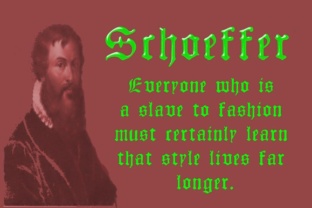
Schoeffer isn't just another serif font. It's a direct descendant of the work of Peter the Younger, son of the pioneering printer Peter Schoeffer, who was apprenticed to Johannes Gutenberg himself. The specific inspiration for this digital revival is a typeface cut between 1509 and 1520. What makes this particular version so compelling is the careful balance it strikes. While the historical exemplar contained around 80 characters, this modern iteration expands to over 900 glyphs. The original forms provide the authentic Renaissance skeleton, while the extensive additional characters—including a full range of modern punctuation, diacritics, and stylistic alternates—make it a fully functional creative font for contemporary use.
The Visual Personality: Where History Meets Usability
At first glance, Schoeffer presents the warmth and texture of early printing. The letterforms have a subtle, organic irregularity that prevents them from feeling sterile or overly mechanical. You'll notice the gentle stress in the rounded strokes, the slightly wedge-shaped serifs, and the modest contrast between thick and thin lines. These are the hallmarks of a humanist serif, which gives the typeface a friendly, approachable feel rather than a cold, authoritative one.
Its personality is one of quiet confidence. It doesn't shout for attention like a bold display font, but it commands respect through its craftsmanship and historical weight. The overall appeal is intellectual, trustworthy, and slightly artisanal. It feels substantial without being heavy, classic without being stuffy. This makes Schoeffer a versatile tool for projects that need to convey heritage, quality, or thoughtful curation.
Practical Applications: From Branding to Personal Projects
Understanding a font's strengths helps you use it effectively. Schoeffer's blend of historical charm and modern completeness opens it up to a wide range of applications.
For Branding and Logo Design: If your brand story involves tradition, craftsmanship, authenticity, or a connection to history, Schoeffer can be a cornerstone of your visual identity. It works beautifully for artisanal food brands, boutique hotels, heritage crafts, publishing houses, or any business that wants to project timelessness and reliability. Paired with a clean sans serif font for body text, it creates a compelling contrast that feels both established and accessible.
In Editorial and Publishing Design: This is where the font truly shines. Use it for book covers, chapter headings, or pull quotes to add a layer of literary sophistication. For magazines or blogs focusing on history, culture, or long-form narrative, Schoeffer sets a tone of thoughtful engagement. Its readability at smaller sizes makes it a credible choice for short blocks of body text in print layouts, though pairing it with a more neutral serif or sans serif for extended reading is often wise.
For Packaging and Marketing: Imagine Schoeffer on the label of a small-batch coffee, a craft beer, or a handmade leather journal. It instantly communicates a product with a story. In marketing materials—think brochures, lookbooks, or website headers—it helps establish a premium, curated aesthetic. It’s particularly effective for social media graphics where you want to add a touch of elegance and depth that stands out from the sea of geometric fonts.
Working with Schoeffer: A Designer's Perspective
Choosing a creative font is just the first step. Using it well requires some practical considerations.
Evaluating Project Fit: Ask yourself: does my project benefit from a historical or artisanal nuance? If you're designing for a tech startup or a ultra-modern fashion brand, Schoeffer might clash. But for a coffee roaster, a writer's portfolio, or a vintage-inspired wedding invitation, it could be perfect. Always consider the emotional resonance you're trying to create.
Testing Font Pairings: The key to successful pairing is contrast. A classic strategy is to combine Schoeffer with a simple, geometric sans serif font. This lets the serif font handle the personality while the sans serif ensures clean readability for longer text. Alternatively, pairing it with a modern, high-contrast serif can create a dynamic, layered hierarchy. The best practice is to test pairings in your specific layout—what looks good in a font specimen page might behave differently in a full design.
Leveraging the Character Set: With over 900 characters, explore the included styles and alternates. Look for ligatures, different numeral styles (lining vs. old-style), and stylistic sets that can add unique flair to headings or logos. This depth is a hallmark of a well-crafted premium font and allows for greater customization.
Readability and Licensing: While Schoeffer is highly legible, always test it at the intended size and medium. For small text on screens, ensure your chosen weight has enough contrast. For large display use, its details will be appreciated. Finally, confirm the commercial licensing covers your intended use—whether for a client's logo, product packaging, or a self-published book. Reputable font foundries provide clear licensing terms, ensuring your design assets are legally sound.
Schoeffer offers a bridge between the rich history of typography and the practical needs of modern design. It's more than just a set of letters; it's a design asset that can help tell a deeper story, build a more resonant brand identity, and add a layer of authentic craftsmanship to your creative work. By understanding its origins and applying it thoughtfully, you can leverage its unique character to make your projects stand out with quiet, confident authority.