Crusty Graffiti: An Elegant Graffiti Font for Bold Branding
The Visual DNA of Crusty Graffiti
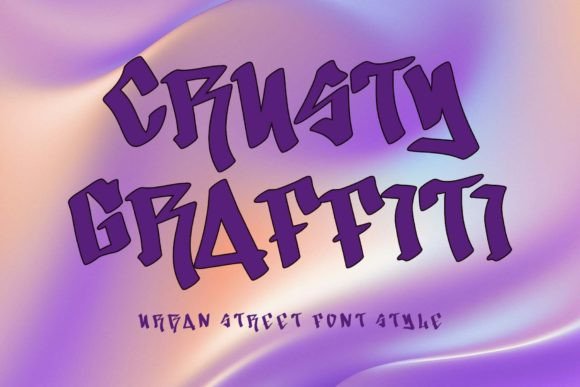
When you first encounter Crusty Graffiti, something unexpected happens. This isn't your typical spray-painted chaos splattered across a brick wall. Instead, there's a refined quality woven into every letterform—sharp edges meeting fluid strokes, raw energy tempered by deliberate elegance. It's the kind of display font that captures attention without screaming for it.
The uppercase characters carry substantial visual weight, with thick strokes that command presence on any surface. The lowercase letters maintain that same confident energy but introduce subtle curves and connections that give the typeface a rhythmic, almost musical quality. Numbers and punctuation follow suit, ensuring consistency whether you're designing a concert poster or crafting a brand identity for an edgy startup. That multilingual support means designers working across international markets won't hit dead ends mid-project.
What sets this creative font apart from countless other graffiti-inspired typefaces is its restraint. Many fonts in this category lean so heavily into rough textures and distressed edges that they become illegible at smaller sizes. Crusty Graffiti walks a different path. The letterforms maintain clarity while still delivering that unmistakable street-art personality. You get the attitude without sacrificing function.
Where This Font Truly Shines
Street art murals represent perhaps the most natural home for Crusty Graffiti. When an artist needs typography that feels integrated with large-scale spray work, this typeface delivers authenticity without requiring hand-lettering skills. The characters hold up at massive scales, maintaining their structural integrity whether you're projecting them onto a warehouse wall or printing them across a fifteen-foot banner.
Music industry applications deserve special attention here. Metal concerts, rock album covers, band merchandise—these spaces thrive on typography that communicates intensity and rebellion. Crusty Graffiti fits naturally into this world. Its aggressive character shapes echo the energy of distorted guitars and pounding drums. Yet that underlying elegance prevents designs from looking amateurish or hastily thrown together. Band logos designed with this font carry a professionalism that separates serious artists from weekend garage projects.
For business branding, the font opens doors to specific market segments. Craft breweries, streetwear brands, skate shops, tattoo studios, urban clothing lines, and independent music labels all operate in visual spaces where conventional sans serif font choices feel sterile and disconnected. Crusty Graffiti bridges that gap, offering a premium font option that speaks directly to audiences who value authenticity and creative expression.
Practical Applications Across Design Disciplines
Logo design represents one of the strongest use cases. When a brand needs a mark that immediately communicates edginess and creative confidence, this typeface delivers. The key lies in restraint—using Crusty Graffiti for the primary wordmark while pairing it with a clean sans serif font for supporting text. This approach creates visual hierarchy that guides the viewer's eye exactly where it needs to go.
Poster design and banner creation benefit enormously from the font's display qualities. Event promoters, festival organizers, and venue managers need typography that pops from across a crowded street or a cluttered bulletin board. The thick strokes and distinctive letter shapes of Crusty Graffiti ensure maximum readability at distance while maintaining that underground aesthetic audiences expect from live music and cultural events.
Consider these practical applications where the font excels:
- Packaging design for artisanal products targeting younger demographics
- Social media graphics that need to stop the scroll in crowded feeds
- Sticker and merchandise design for bands, brands, and organizations
- Editorial design for magazines and publications covering urban culture
- Web design headers and hero sections for lifestyle and entertainment brands
Small business owners running independent retail shops, food trucks, or creative agencies often struggle with finding design assets that feel genuinely distinctive. Most free fonts circulating online carry the same generic qualities that make brands blend into the background. Investing in a commercial font like Crusty Graffiti immediately elevates the quality of every design piece produced, from business cards to storefront signage.
Working With Font Pairings and Readability
Smart font pairing separates good design from great design. Crusty Graffiti works best when contrasted with something clean and structured. A geometric sans serif font like Futura or Montserrat creates striking juxtaposition. Alternatively, pairing it with a simple serif font for body copy introduces sophistication that balances the font's raw energy. The goal is always contrast—letting each typeface do what it does best without competing for attention.
Readability demands honest evaluation before committing to any project. At headline sizes—typically thirty-six points and above—Crusty Graffiti performs beautifully. Every character reads clearly, and the stylistic flourishes enhance rather than hinder comprehension. Drop below that threshold, and the decorative elements begin working against you. Paragraph text set in this font would frustrate readers within seconds. Respect that boundary, and you'll unlock the font's full potential.
Evaluate project fit by asking yourself a few straightforward questions. Does the target audience appreciate street culture aesthetics? Does the brand personality align with bold, expressive typography? Will the font primarily serve headline and display purposes rather than extended reading? When those answers point yes, Crusty Graffiti deserves serious consideration in your modern typography toolkit.
Before finalizing any design, test the font across every intended medium. Screen rendering differs significantly from print output. What looks powerful on a twenty-seven-inch monitor might lose definition on a mobile screen. Printed materials introduce paper texture, ink absorption, and production tolerances that affect the final appearance. Smart designers always proof their work in context, and that practice applies doubly when working with expressive display typefaces like this one.
Licensing and Professional Considerations
Understanding commercial licensing protects both designers and clients. Crusty Graffiti operates as a commercial font, meaning projects intended for profit, distribution, or client work require proper licensing. This isn't bureaucratic overhead—it's professional practice that ensures your brand identity work stands on solid legal ground. Always verify that your license covers the specific use case, whether that's digital web design, physical merchandise, or broadcast media.
Content creators, bloggers, and hobbyists exploring this font for personal projects should still review the license terms carefully. Many premium font licenses distinguish between personal and commercial use, and understanding those boundaries prevents headaches down the road. When in doubt, reach out to the foundry or distributor for clarification rather than making assumptions.
The investment in quality typography pays dividends across every project touching your brand or your clients' brands. Crusty Graffiti offers a distinctive voice in a landscape crowded with forgetnable typeface options. Used thoughtfully, with proper attention to context, pairing, and readability, it becomes a powerful tool for anyone building visual identities that demand to be remembered.